 จันทร์-เสาร์ เวลา 08.00-18.00 น.


ไม่มีหมวดหมู่
Examining Account Setup and Verification at slotti casino for Estonian Players

Opening an account at an online casino should feel straightforward, but the details that are important most for Estonian players are often hidden in the verification flow rather than the registration form itself https://slotticasino.fi/et-ee/. At slotti casino, the sign-up process has been created to serve players who rely on local banking methods, expect a fast KYC turnaround, and wish to know exactly what documents will be required before they make a first deposit. This review analyzes each step of account creation and identity verification from an Estonian perspective, reviewing the fields a player fills in, the currency and language options provided, the documentation commonly requested by the compliance team, and the timeframes involved before a withdrawal becomes possible. The analysis also addresses how payment method linking impacts the verification path, what security protections are in place during data submission, and what parts of the casino experience become available only after the account is fully approved. By keeping grounded in the observable registration interface rather than promotional language, the article answers the real questions a new player from Tallinn, Tartu, or anywhere in Estonia would raise before handing over personal information.
Beginning the Registration Process as an Estonia-based Player
The access point to slotti casino for an Estonian visitor is a sign-up button that is located in the header of the homepage, guiding directly to a registration form as opposed to a multi-page wizard. The casino does not geoblock users in a way that blocks viewing available games or reading terms, but the moment a player clicks to create an account the interface changes to a language choice that features Esti keel alongside English and Finnish. This language selection is more than a cosmetic toggle; it dictates which version of the terms and conditions, privacy policy, and bonus rules the player legally accepts, so selecting the correct native language is an essential early step. The form itself maintains a logical sequence that requests personal details first, then contact information, and finally account credentials, which permits a player to see exactly how much data is required before the system creates the profile.
The Pre-Registration Scenario
Before any fields are filled, Estonian players can scan the game library in demo mode, which is a effective way to assess whether the slot and live dealer selection matches their preferences. The visible site sections feature category filters for top slots, new releases, jackpot games, and table classics, and the footer holds licensing information, responsible gaming tools, and links to support. This transparency means a player can verify the regulatory status and the complaint procedure before providing an email address, which is a mark of a casino that wants informed sign-ups rather than rushed conversions. The pre-registration phase also reveals whether the casino currently runs a no-deposit offer, though the exact terms and any Estonian-specific restrictions should be checked on the promotions page before completing the form, as availability can shift without notice.
Filling out the Registration Form: Mandatory Fields and Preliminary Choices
The account creation form at slotti casino requests a standard set of personal identifiers, but the order and the specific fields have implications for how quickly the later verification steps move forward. Estonian players are prompted for full name, date of birth, personal identification code, residential address, email, and phone number in a single-page layout. The inclusion of the national identification code early in the flow is notable because it directly connects the future KYC check to the Estonian population register or other official databases, which often speeds up the automated verification stage. The system verifies the format of the code and the date of birth to catch typographical errors immediately, reducing the chance that an account gets flagged for manual review solely because of a mismatched entry.
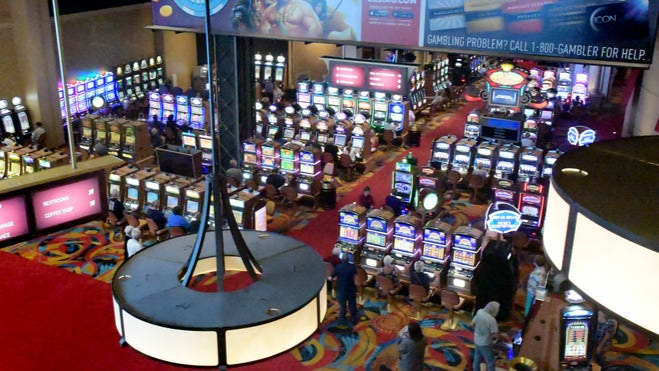
After identity information, the form prompts for a preferred currency and a self-selected password. For players based in Estonia, the euro is the natural and recommended choice, as it prevents conversion fees on deposits and withdrawals and matches with the banking methods that Estonians typically use, such as Trustly-linked bank transfers or direct card payments in EUR. The casino does not impose a specific currency based on IP location, so the player must consciously pick EUR during sign-up; once set, the currency cannot be altered retroactively without contacting support, which is a policy worth considering before hitting the submit button. Additionally, nationalpost.com the registration flow inquires whether the player wants to set deposit limits immediately after the account is created, incorporating a responsible gaming touchpoint into the onboarding itself rather than burying it in a separate menu later.
Verification Processing Time, Typical Delays, and What Estonian Users Should Expect
The time it takes for slotti casino to move an account from unverified to complete verification depends on the volume of submissions, the completeness of the uploaded documents, and whether automated systems can handle the file without human oversight. In reality, a lot of Estonian players who upload a clear ID-kaart image and a matching digital bank statement get their verification done within several hours on working days, although the published service level often states a period of up to one or two days. The compliance team reviews documents during standard business hours, and a submission submitted on a Friday night or on a public holiday might justifiably stay unhandled until the following business day. The casino sends an email notification when the verification status changes and updates the document hub in the account as well, thus the player need not contact support to inquire about progress unless the expected timeframe has passed without a response.
Declines, if they arise, are almost always accompanied by a concise note outlining the necessary corrections. For Estonian users, the typical problem areas consist of an address inconsistency where the address proof has a somewhat different street name style than the one input during registration, or an ID card scan that cuts off a corner of the document. A frequent problem occurs when a player employs a joint payment method, for instance, a shared account or a family member’s payment card, because the name on the payment instrument does not match the account holder name. Such scenarios typically initiate a manual assessment and a requirement for further notarized consent, which can considerably prolong the procedure. Those intending to use a payment method not in their own name should account for an extended verification period and likely caps on the first cashout.
Connecting a Deposit Method At the Time of Initial Account Use
The first deposit itself is not blocked by verification at slotti casino, and Estonian players can top up their account right away after registration using a variety of locally relevant payment channels. That said, the selection of payment method at this stage influences the additional documents that might be required when verification is triggered. As an illustration, if a player deposits with a bank-issued Visa or Mastercard, the compliance team will subsequently probably need a photo of the physical card with the middle digits covered and the name visible, or a screenshot from the online banking interface displaying the card details. A deposit made via Trustly or another direct bank payment service that uses Strong Customer Authentication could result in a smoother experience as the bank-level authentication already links the player to the IBAN, and the verification team often accepts a bank statement displaying the deposit transaction together with the player’s name as adequate proof of payment method ownership.
The processing times for the first deposit are real-time or near-instant for all the typical Estonian options, including card payments, Trustly-based bank links, and certain e-wallets. The minimum deposit amount is plainly shown inside the cashier, and it typically falls between ten and twenty euros for most methods, which is a typical entry point for the Baltic market. The casino does not charge deposit fees, but the player should confirm with their own bank about any cross-border card fees, notably if the acquiring side is based outside the eurozone, though such costs are rare with today’s SEPA-aligned processing. Before confirming a first top-up, the interface also surfaces the welcome bonus opt-in, which is the moment where an Estonian player decides whether to attach the headline match offer to their account, a decision that will later interface with wagering requirements tracked inside the bonus section of the profile.
Document Upload and the Verification Portal

Once the first account is active, slotti casino presents a dedicated verification section inside the player’s profile, often referred to as a KYC hub or document centre. This is where the compliance team communicates exactly which documents are pending, and Estonian players will see that the requests are adapted to the information already provided—the personal identification code frequently triggers a request for a government-issued ID that corresponds to the code, and the residential address initiates a separate proof-of-address requirement. The platform allows common file formats such as PDF, JPG, and PNG, and the upload interface indicates a progress indicator for each document so that the player can instantly check whether the file was accepted properly before leaving the page.
Approved ID Documents
For Estonian users, the primary identity document usually requested is a valid ID-kaart (Estonian ID card) or a passport. The ID-kaart is particularly convenient because the digital photograph and personal data align directly with the identification code supplied during registration, which can accelerate automated checks. In cases where a driver’s licence is used, the verification team may still ask for a secondary document if the licence does not display a personal identification code, so opting for the ID card is the shortest path. The casino’s instructions require that the uploaded copy shows all four corners of the document, has no glare obscuring the photograph or the machine-readable zone, and is in colour. A black-and-white scan or a mobile photo taken in poor lighting is a common reason for rejection, and players from Estonia who have used their ID card for other online services will be familiar with the expectation of a high-quality digital image.
Residence Confirmation Standards
The residency proof requirement follows a standard template: the document needs to be a recent utility bill, bank statement, or official government letter that lists the player’s name and the address submitted during registration. For apartments in Tallinn or other Estonian cities where the postal address features an apartment number, it is essential that the document details the full address exactly as it is displayed in the account profile, because even a missing flat number can result in a manual mismatch. The casino generally recognizes documents generated within the last three months, and digital bank statements retrieved from Swedbank, SEB, or LHV internet banks in PDF format are treated as originals, which removes the need to post physical paper. Players should refrain from sending mobile network invoices that show only a billing address that may differ from the residential address, as those are commonly rejected and delay the verification timeline.
Registration via Mobile and the App-Free Verification Process
Estonian players who prefer to control everything from a phone will find that slotti casino doesn’t need a downloadable application to create an account or to fulfill KYC. The mobile web interface matches the desktop registration form, and the document upload feature operates consistently through smartphone browsers by accessing the device’s camera directly or by picking files from the photo gallery. This implies a player can snap their ID-kaart on the spot, adjust the image slightly if needed, and submit it within the same browser session without moving to a computer. The responsive layout guarantees that the form fields are large enough to tap accurately, and the on-screen keyboard doesn’t hide the submit button, a minor yet significant usability detail when entering a long identification code on a small screen.
The lack of a native app doesn’t affect on verification speed or security, because the upload channel is encrypted at the transport layer regardless of the device. That said, players using a mobile device need to be aware of the quality of the camera and the lighting conditions when taking identity documents; a high-resolution image taken in natural daylight is much more likely to pass automated checks than a grainy photo taken under indoor lamps that generate glare on the plastic surface of the ID card. The casino’s verification interface doesn’t compress images excessively, but it does enforce size limits that are clearly noted before the upload begins. As long as the file is within that threshold—typically around ten megabytes for an image—the system will take it, so there is no need to downscale the photo before uploading.
Security of Accounts and the Licensing Framework that Safeguards Estonian Data
The moment a player submits personal information during registration and document upload, the data is secured by TLS encryption, and the casino’s privacy policy describes how information is stored and shared with verification vendors. For Estonia-based users, the key legislative protection stems from the GDPR, which confers rights of access, rectification, and erasure, and from the gambling licence under which slotti casino operates. While specific licence details should be verified on the official page, the operator typically possesses a remote gambling licence granted in a European Union jurisdiction, which means it must comply with strict anti-money laundering directives and data security standards that directly influence the verification workflow. The site footer includes clickable licence seals that link to the register of the issuing authority, and players should be sure to verify the licence is active before filling out the sign-up form.
Inside the account itself, additional security layers become available after verification is completed, or in some cases even before. Two-factor authentication is often provided as an optional feature that links the login process to a mobile authenticator app, and session management tools enable a player to see which devices have recently accessed the account and to log out remotely if needed. These controls are especially pertinent for Estonian users who travel frequently or who plan to use the casino on shared networks. The responsible gaming suite, accessible from the account menu, supports deposit limits, loss limits, and reality checks that align with the local emphasis on player protection, and any restriction applied takes effect immediately, which is a critical point for someone who wants to set boundaries from the first day.
What Alters After Verification and How to Navigate the Entire Offering
Once the account status flips to verified, several tangible changes take effect, and these define the real player experience at slotti casino. The most obvious difference is that the withdrawal function becomes fully available, allowing an Estonian player to initiate a cashout to the identical payment method used for deposit. The processing times for withdrawals are based on the method, but e-wallet and Trustly-based payouts often reach the player within a few hours, whereas card withdrawals can take from one to three banking days. The verification badge also lifts the commonly lower transaction caps that apply to unverified accounts, so high-value players who aim to deposit larger amounts can proceed without encountering processing blocks that would otherwise require contacting support.
Substantively, a validated account opens up the full library of games from software studios such as NetEnt, Play’n GO, Pragmatic Play, Evolution, and others whose names are visible in the game lobby’s provider filter. Estonian players can explore a wide range of slot titles, progressive jackpots, a collection of blackjack and roulette tables, and a live casino section where real dealers run games in real time. The welcome bonus that was possibly selected during the first deposit becomes activated and its wagering progress can be tracked in a dedicated bonus bar, so the player always knows how much of the playthrough requirement remains before a withdrawal of bonus-related winnings is authorized. Other ongoing promotions, such as reload bonuses and casino tournaments, become visible in the account’s promotion feed, and opting into them generally requires no additional verification beyond the initial KYC.
The post-verification phase is also the ideal time to submit backup documentation or update personal details if an address change occurs later. The document centre remains active, and Estonian players who relocate to a new apartment should submit a fresh proof of address before seeking a withdrawal, because a mismatch detected after the fact can temporarily halt the cashout. Support channels, including live chat and email, are reachable from the verified dashboard, and typical response times for account-specific queries are brief enough that a player can settle document questions during the same session. By arranging the verification path from the moment they enter their identification code into the registration form, Estonian users can sidestep the common blockers that delay the full casino experience and instead get to the game lobby with an account that is already conforming, secure, and customized to local banking realities.
